Influencer marketing has become one of the most potent ways businesses connect with customers. Cheaper and sometimes more efficient than traditional advertising, influencer marketing thus offers higher ROI and better conversion rates. However, it is still underutilized, leaving room for growth. This guide will cover everything from understanding who influencers are to the influencer marketing triangle and how to run a successful campaign. I gained the knowledge to write this article through a Udemy course taught by Robin and Jesper, which I highly recommend.
What is Influencer Marketing?
Influencer marketing is when a social media influencer helps a business sell its products or services. An influencer can get people to buy products or services by sharing or recording them on social media. The key is to find the right influencer whose audience aligns with your brand.
The Influencer Marketing Triangle: A Win-Win-Win
Influencer marketing works best when it creates a win-win-win situation between the business, the influencer, and the audience:
- Businesses have products to sell and need an audience.
- Influencers have an audience but need products or services to promote.
- The audience gets introduced to products that fit their interests.
When done right, the business gains customers, the influencer gets compensated, and the audience benefits from relevant product recommendations.
Finding the Right Influencers
-
Understand Your Niche
- Know your audience before looking for influencers.
-
Find Candidates
- Does their audience align with your brand and product?
-
Use Paid or Free Tools
- Paid Tools: Upfluence, Afluencer, Influencity (helpful but unnecessary).
- Free Methods:
- Search hashtags in your niche.
- Research potential influencers:
- Do they fit your niche?
- How many followers do they have?
- Where are they located?
- Do they match your branding?
- How engaged are their followers?
-
Engagement Rate Matters in Influencer Marketing
- Engaged followers are more likely to buy.
- Formula: (Likes + Comments) / Followers × 100
- Use averages; this isn’t an exact science.
- Don’t include viral “unicorn” Content as, it can throw off calculations.
- Essential: More followers usually mean lower engagement percentages which is normal. Look at good engagement rates for their follower level and compare your calculations to that.
Paying Influencers
Most influencers want one or a mix of these:
- Money – Pay them for promotion.
- Free Products – More typical for nano and micro-influencers.
- Authority – Some like being associated with reputable brands.
- Meaning – They may support your mission or cause.
How Much to Pay?
| Influencer Type | Followers | Payment Range |
|---|---|---|
| Mega | 1M+ | $10,000 – $1,000,000 per post |
| Macro | 500K – 1M | $5,000 – $10,000 per post |
| Mid-Tier | 50K – 500K | $500 – $1,000 per post |
| Micro | 10K – 50K | $100 – $500 per post |
| Nano | 1K – 10K | $10 – $100 per post |
- Prices vary by platform, post type, niche, and influencer, so take these with discretion.
- Affiliate marketing: Pay influencers based on what they sell.
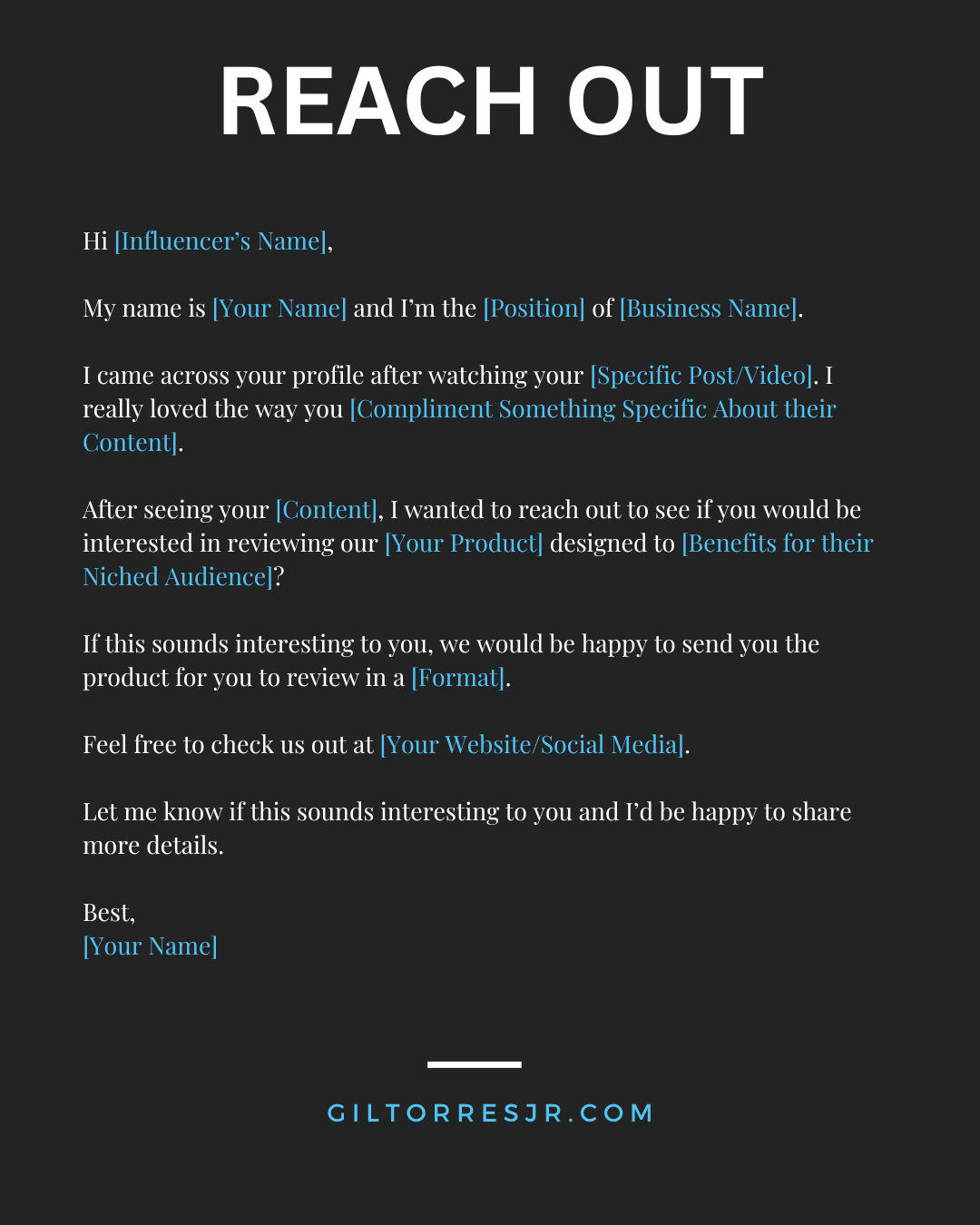
Reaching Out to Influencers
- Use Email (DMs may be the only option for nano-influencers).
- Make it Personal – Show appreciation for their page.
- Suggest Collaboration – Keep it short and straightforward.
- Share Your Website & Socials so they can learn more.
- Focus on Them – Don’t make it all about you.
Signing the Influencer
- Create a Paper Trail – Nano/micro-influencers don’t always have contracts, but records are essential.
- Negotiate Terms – Be clear about expectations.
- Set Deadlines – If paying, set clear deadlines. If offering free products, just suggest a timeframe.
- Build a Relationship – This can lead to long-term success.
- Request Mentions – Ask that they tag your brand, website, or social accounts.
Track and Measure Results
- Use CRM tools like HubSpot.
- Track with:
- Discount codes
- Affiliate links
- UTM code
- Aim for a minimum ROI of 2, but focus on net profit for long-term scalability.
Creating an Influencer Marketing Campaign
- Set a Budget – Know how much you’re willing to spend.
- Find Influencers – Match your budget with the right tier of influencers.
- Reach Out – Build a win-win-win relationship.
- Sign the Influencer – Ensure their expectations align with your budget.
- Track and Measure – Aim for at least a 2x ROI.
Building an Influencer Marketing Team for Scale
- Reinvest profits to scale up marketing efforts.
- Outreach – Keep finding new influencers.
- Retention – Maintain current contracts and product shipments.
- Data Analysis – Track what works and refine your strategy.
- Cost Tracking – Make sure you stay profitable.
Conclusion
Influencer marketing provides a massive degree of opportunity for growing your business. We can maximize our success by understanding the influencer triangle, creating win-win situations, finding the right influencers in your niche, and creating a strong campaign. Scale your operations, grow your team, and measure your results to take your influencer marketing to the next level.