If you’re reading this, you’re probably just starting your blog or getting ready to start. You want to start with a good foundation, so you’re researching the best practices, SEO tips, and strategies to grow your blog.
I’ve got you covered! I’ve gathered advice from some of the best in the industry to help you start and grow your blog effectively from the beginning.
How to Grow a Blog by Understanding Google’s Goal
In Russel Brunson’s book “Traffic Secrets,“ he explains this concept beautifully, and I highly recommend reading it. On September 15, 1997, Larry Page and Sergey Brin registered Google.com, and with it, their new algorithm for displaying results based on your searches. Their idea was that the more links returned to your page (backlinks), the more critical your website was, ranking you higher on the search engine.
People found exploits in their system (spamming backlinks), so Google had to make an update to fix this. Since then, Google has continuously updated its algorithm and will continue to do so.
Here’s the Key: If we want to grow our blog we need to understand Google’s goal to ensure we are on the right side of the algorithm updates. Their goal is simple: a better user experience. When we align with this goal, the algorithm becomes our ally, consistently sending us almost unlimited traffic for free!
Why Being Consistent is Key to Growing a Blog
If you take away just one thing from this article, let it be this: you must show up daily. Consistency is key, and here’s why:
How Consistency Affects SEO and Blog Growth
- Search engines favor relevance and activity. Brandon Himpfen notes in an article:
“By maintaining a consistent posting schedule, you signal to search engines that your blog is active, relevant, and worth indexing more frequently. This can improve your chances of ranking higher for your target keywords.”
Building Trust Through Consistency to Grow a Blog
- In the same way that posting daily shows search engines you are active and relevant, it shows your audience that you are. This helps build trust and authority in your niche.
Why It Takes Time for Audiences to Discover Your Blog
- Your audience needs time to find you. I think Nathan Barry describes this beautifully in his article “Endure long enough to get noticed,” where he says:
“How many great TV shows have you discovered in season 3 or later? I started watching Game of Thrones after they had released 5 seasons. Pat Flynn had released at least 100 episodes of his podcast before I even knew he existed. I discovered Hard Core History years after Dan Carlin started producing it. This is such a common experience. There is so much content being produced that we can’t possibly discover it all. So, instead, we wait for the best content to float to the surface over time. If step one in building an audience is to create great content, step two is to endure long enough to get noticed.”
Finding your voice
- When you start blogging, you’ll probably not be very good—and that’s okay. The act of showing up every day is an achievement in itself. Consistency helps you improve. As Russell Brunson explains in Traffic Secrets:
“If you can publish every day for a year, you’ll never have to worry about money problems again. During the process, you will find your voice, and your audience will have time to find you.”
- The beauty is that while you’re still finding your voice, most people won’t notice your mistakes because your audience is still growing. This gives you room to improve without the pressure of perfection.
How Guest Posts and Community Engagement Can Help Grow a Blog
One of the best ways to grow your blog organically is to write guest posts on other people’s blogs and be an active community member. Blogging is about sharing what you know, experience, and think. Most of what I will share comes from things I learned in some of Neil Patel’s articles. I recommend checking him out. Here’s why being active in your community and writing guest posts matters:
Boost Your Authority to Grow Your Blog
Being an active member in your community or niche through social media, blog comments, groups, forums, etc., allows you to display your knowledge on the subject by helping people with their questions, engaging in intelligent conversations, etc. Writing guest posts is another way to display your knowledge on the subject. This will show people that you know what you’re talking about and hold the things you have to say with more value.
Build Relationships for Blog Growth
Engaging with your community helps you connect with like-minded people in your niche. These relationships can lead to collaborations, partnerships, and new opportunities to expand your reach. It will also allow you to expand your knowledge and brainstorm new and innovative ideas.
Drive Traffic to your Blog
Guest posting is one of the most effective ways to drive targeted traffic to your blog. By providing valuable content on another site, you’ll attract readers who are genuinely interested in what you have to say. Include a link to your blog in your bio or the post itself (where appropriate) to encourage readers to visit your site.
Learn from others to Build a Blog
Being an active member in your community allows you to learn what content is working or not working for others, what strategies they are using, and what tone they speak in, which can help you frame your own content and brainstorm ideas.
Tips for Guest Posting to Grow Your Blog
- Identify Relevant Blogs: Find blogs in your niche with an audience that aligns with your target readers.
- Pitch with Value: When reaching out to blog owners, propose topics that will resonate with their audience and showcase your expertise.
- Provide High-Quality Content: Treat guest posts as seriously as you would content for your own blog. Make sure to put your best content and effort forward.
- Engage with the Audience: Once your post goes live, respond to comments and interact with readers to build relationships and trust.
Why Building Your Email List Early is Essential for Blog Growth
Building an email list is one of the most valuable things you can do to grow your blog. According to a study by McKinsey & Company, email is nearly 40 times more effective at acquiring customers than Facebook and Twitter combined. While you may have traffic from social media and search engines, this is all traffic you are borrowing. In reality, you don’t own that traffic, but they do. An email gives you direct access to your audience, who genuinely want to hear from you. Starting early ensures you don’t miss opportunities to build and nurture relationships with your audience. Brad Merrill, who I mentioned earlier, says
“Your list is your greatest asset for building a strong community and a profitable business.”
Here is why this is crucial:
How Email Lists Give You Control Over Blog Growth
Social media algorithms change, and search engine rankings fluctuate, but your email list is yours. That’s traffic you own, and it should not be underestimated. You can communicate with them directly and bypass the unpredictability of third-party platforms.
Why Engaged Subscribers Are Key to Growing a Blog
Typically, email subscribers are far more engaged than casual blog visitors since they have opted in to hear from you. This means they’re more likely to open your emails, click through the content you send them, and actually take action on your offers.
How Email Lists Build Trust and Support Blog Growth
Consistently providing value through your emails help build trust and loyalty with your audience. Over time, this loyalty will help increase conversions no matter your goals. (Driving traffic, selling products, promoting services, etc.)
Tips for Starting Your Email List
- Offer a Lead Magnet: Provide something valuable in exchange for an email address. This could be a free ebook, checklist, template, or access to exclusive content. If you’re looking for inspiration, check out our comprehensive list of 100 lead magnet ideas!
- Use the Right Tools: Tools like ConvertKit, Mailchimp, or ActiveCampaign make it easy to set up email forms and manage your list.
- Add Opt-in Forms to Your Blog: Place email signup forms strategically on your site to capture visitors’ attention.
- Encourage Subscriptions: Remind readers in your content to join your list for updates, tips, exclusive insights, or to get access to some exclusive resource (Lead Magnets).
Consistency is Key
Just like with blogging, consistency is crucial. Send regular emails with valuable content to keep your subscribers engaged with your content. Starting your email list may not feel like an immediate priority, but it’s a big investment in the future growth of your blog. Over time it can become one of your most powerful tools for driving traffic.
Strategies to Grow a Blogs Traffic by Ranking for Keywords
Ranking higher for your target keyword requires a strategic approach involving thorough research, creating unique content, keeping quality high, and leveraging backlinks. Ranking high is a competitive and complex strategy, but here are the basics to help optimize your strategy and grow your blog:
How Keyword Research Helps You Grow a Blog
Before you start writing, search your target keyword to see what’s already ranking. This will give you an idea of what’s working and what gaps you can fill. Look for opportunities to improve something, whether new, more detailed, or uniquely formatted content.
Creating Unique Content to Grow a Blog’s Traffic
Search engines reward content that stands out. Don’t just copy what’s already out there. Add insights, examples, or unique formatting, like lists or infographics.
How Backlinks Drive Blog Growth
Backlinks, links from other sites to yours, are a MAJOR factor in search engine rankings. You can earn these by building relationships in your niche, writing guest posts, or creating sharable content (content people naturally want to share). I created an article titled “Best Backlink Building Strategies in 2025” if you want to learn more about this.
How Understanding Your Audience Can Help Grow a Blog
One of the most essential concepts in Traffic Secrets by Russel Brunson is understanding your audience and learning to communicate in their language. If you’re trying to grow your blog understanding this is essential. He emphasizes that you need to know who you’re speaking to and craft a message in a way that they can understand and resonate with. I recommend reading the book if you need help generating traffic for your business. Here’s how you can apply his strategies:
How Speaking Your Audience’s Language Helps Grow a Blog
Brunson discusses creating a “customer avatar” (a detailed profile of your ideal audience member). By knowing their fears, desires, goals, and pain points, you can craft content that speaks directly to them.
Avoiding Confusion to Keep Growing Your Blog
Make sure you are not speaking in a language they do not understand. By this, I mean if you’re an expert at something, there’s a lot of terminology that you think everyone should know or understand, but in reality, they probably don’t. For example, someone who teaches about the Keto diet might use big words like ketones, but in reality, someone just starting their journey in Keto has no idea what that means.
Learn Where They Congregate
Brunson emphasizes the importance of finding where your audience hangs out online, whether it’s forums, social media, or YouTube. You need to know where they hang out and who they follow. These are places where you can learn how they talk, what they care about, etc. You can also use these other people’s concepts to help craft your own content.
Essential SEO Tips to Grow a Blog
SEO is a powerful tool; doing it right will help you get on the good side of the algorithms and grow your blog faster. All pages and posts you make should have proper SEO. I’m going to share some of the best practices I learned in a Udemy Course, Blogging Masterclass: How To Build A Successful Blog, instructed by Brad Merrill. This course was great, and I highly recommend you all take it, as it covers everything from setting up a blog to monetization.
Best SEO Tool for Growing a Blog
- Yoast SEO (Plugin for your WordPress site)
Basic Site Setup
 Make sure this box is not checked. You are not allowing search engines to crawl your site if it is. You can find it on your WordPress reading settings.
 Make sure this box is not checked. You are not allowing search engines to crawl your site if it is. You can find it on your WordPress reading settings.
 Page Titles
- Titles should be descriptive and enticing so people click through.
- Keywords should appear early.
- Include the site name at the end for brand recognition.
Why Meta Descriptions Are Crucial for Blog Growth
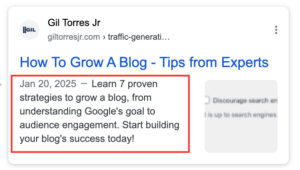
Meta Descriptions are the black text that appears under the title in Google search results.
- Write them yourself (if you don’t, a snippet will automatically be taken, and we don’t want this).
How to Use Responsive Design to Grow a Blog
- Make sure your theme has a responsive design. A responsive design automatically adapts to smaller screens like smartphones and tablets.
- If you can, add breadcrumbs to your site. Breadcrumbs are a navigation tool that shows the user’s location and how they got there.
- Headings help users skim your page and help search engines see how your content is organized. Make sure you are using the right headings for the right purpose. Tip: Your title should be the only H1 tag.
Using Yoast to Optimize Content and Grow a Blog
- Enter the main keyword you’re trying to rank for in the “Focus Keyphrase” Tab in your Yoast panel, and it will analyze your post to make sure it’s optimized. If it’s not, it will tell you what you need to fix to optimize it.


Internal Links
- Make sure you include internal links to other pages on your site. This will help search engines understand the relevance of your article and help readers dig deeper into your content.
- Prioritize your most important content. This will pass link value to those pages, telling search engines they are important.
- Make sure they are relevant.
Optimizing Images to Grow a Blog
- When you insert an image into your site, write a quick descriptive text in the alt text box to tell search engines what it is.